

History of Polygamy and Polyamory
Polygamy and polyamory are two concepts related to romantic relationships involving more than two individuals. Polygamy refers to a situation where an individual commits to more than one person within a couple framework. In contrast, polyamory refers to romantic relationships involving more than two individuals, but unlike polygamy, there is no non-consensual commitment here and no restriction on the number of partners.
These concepts appear in various cultures and historical periods, and their evolution can be seen over the years. Polygamy existed in various ancient cultures, and it seems that Eastern cultures had high authority in this matter. In contrast, in Western and Neanderthal cultures, polygamy was less common or nonexistent.
In the modern era, beginning of the 21st century, the last decade and the technological revolution may change the ways of thinking and acting regarding polygamy and polyamory. With the development of the internet and social networks, the culture of these relationships is seen changing and spreading dramatically. Online communities play an important role in promoting the culture of polyamory and polygamy, providing support systems and knowledge to people seeking to live these relationships in a healthy and balanced way.
In conclusion, the history of polygamy and polyamory is vast and diverse, showing that polygamous and polyamorous relationships exist and evolve over time and across cultures.
Differences between Polygamy and Polyamory
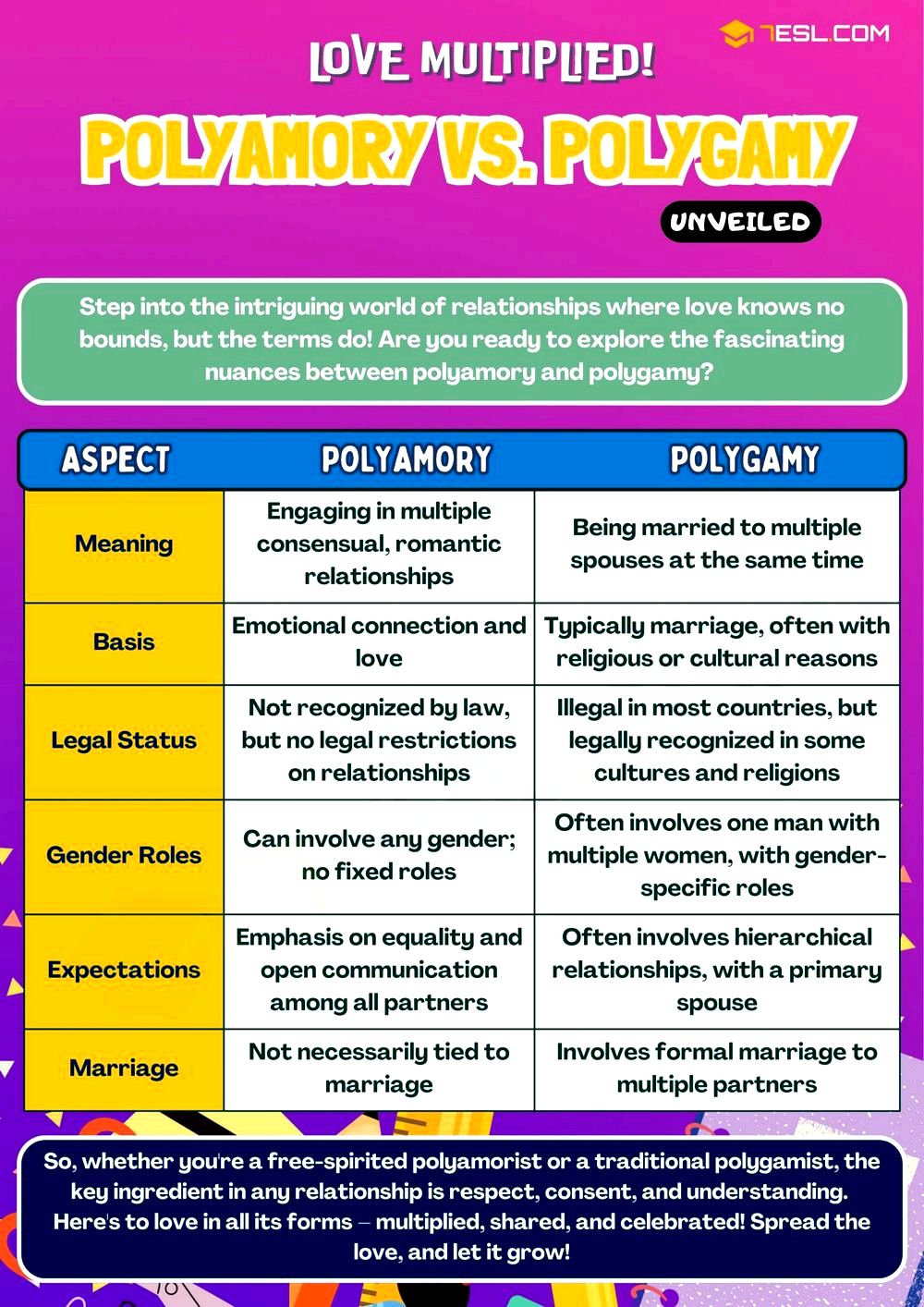
Polygamy and polyamory are two concepts related to non-committed relationship systems, but they differ fundamentally. Polygamy is a culture where one man remains with multiple women, while polyamory is a romantic or emotional relationship involving more than one individual.
Polygamy is common mainly in Muslim and African cultures, and sometimes there are theories and cases where women can also be polygamous. The purpose of polygamy can be to multiply offspring, provide economic or social support, or simply love and romantic connection.
Polyamory requires sensitivity, giving, and deep understanding between individuals
Dr. Daniel Seigel – Clinical Psychologist

On the other hand, polyamory is a culture where things like polygamy are done, but in a more open and honest way. It is a lifestyle based on a sense of freedom and courage to deal with various emotions and behaviors in relationships.
In summary, polygamy and polyamory are two common concepts in the field of non-committed relationship systems, where polygamy refers to a couple system where one man remains with multiple women, and polyamory is a romantic or emotional relationship involving more than one individual.
Types of Polygamy and Polyamory in the Modern World
In the modern world, there is a wide variety of types of polygamy and polyamory that suit a wide range of needs and desires. Polygamy is the term used to describe relationship systems where women or men commit to more than one individual simultaneously. Types of polygamy include regular polygamy, modern polygamy, relational polygamy, and more.
Modern polygamy is a type of polygamy where equality between women and men is practiced, and it can be seen in cultures where relationship systems are built on ideas of equality and respect for all involved. Regular polygamy is the traditional form of polygamy, where it is more common for a man to have relationships with more than one woman, usually in official marriages according to the law.
Polyamory requires sensitivity, giving, and deep understanding between individuals
Dr. Daniel Seigel – Clinical Psychologist
Polyamory is a term used to describe relationship systems where people are allowed to have romantic relationships with more than one individual simultaneously, without entering the traditional marriage framework. Types of polyamory include romantic polyamory, sexual polyamory, respectful polyamory, and more.
In the modern era, the concepts of polygamy and polyamory are changing and spreading among the wider audience, and there is an increasing use of them to describe the complex relationship systems existing in the modern world. When we examine the different types of polygamy and polyamory, we see that they offer innovative and interesting relationship solutions that fit a wide range of people and needs.


Influence of Culture and Religion on These Concepts
The influence of culture and religion on the concepts of polygamy and polyamory is a fascinating subject that interests researchers in non-committed relationship systems. The culture and religion of each community and society deeply influence how such relationship systems are maintained and the approaches and perceptions regarding polyamory and polygamy.
In different cultures around the world, there are different concepts of polygamy and polyamory, reflecting the unique values and traditions of each community. For example, in certain religious cultures, polygamy is common as an accepted and necessary institution, while in other cultures, it is considered immoral and unacceptable.
Religion also influences the approach to polyamory, as in certain religions, examples of polyamory can be found that are accepted and recognized, while in other religions, it is considered illegal and even forbidden.
Therefore, based on the influence of culture and religion on the concepts of polygamy and polyamory, it is important to understand that polygamous and polyamorous relationships are complex issues intertwined deeply with the values and traditions of each community.
Challenges and Benefits of Polygamous and Polyamorous Relationships
Western culture is familiar with the familiar concept of monogamous relationships, where exclusive couplehood is the primary model of relationship systems. However, polygamy and polyamory are two other sub-models based on the idea of multi-sided and multi-loving relationships.
The challenges of polygamous and polyamorous relationships are many and varied. Among the challenges encountered in a polygamous relationship system include our familiar worldview on loving relationships, our cultural heritage suspecting multi-sided relationships, and the practical challenges of effectively managing multi-sided relationships.
However, alongside the challenges, there are also advantages to polygamous and polyamorous relationships. In a multi-sided relationship system, each side can find suitable connections, develop personally, and receive the support and love they need.
Additionally, polygamous and polyamorous relationships can have an impact on monogamous relationships by granting each side the freedom to be themselves, develop, and grow within their relationships optimally.

Therefore, despite the challenges, polygamy and polyamory have their advantages, and it seems that Western culture is also progressing towards multi-sided and multi-loving relationship systems.
Polyamory requires sensitivity, giving, and deep understanding between individuals
Dr. Daniel Seigel – Clinical Psychologist